The Hardware Nobody Retires: How Forgotten Routers Become a Suburb's Weakest Link
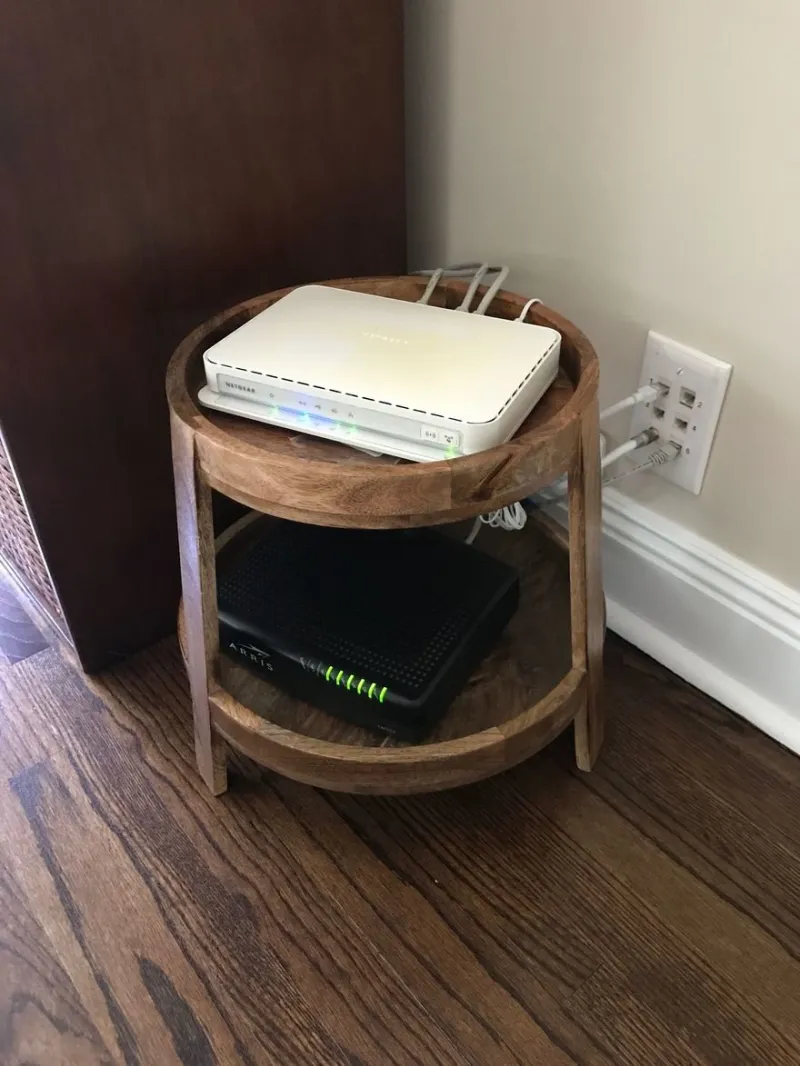
Photo: old dusty wifi router on shelf in home guest room, via s3files.core77.com
In the corner of a guest room in a typical Midwest suburb, a wireless router hums along, unnoticed. It was purchased in 2016, configured once, and never touched again. The household upgraded their internet plan twice since then. The router never got the memo.
Scenarios like this are not anecdotes; they are the default condition of American home networking. Security researchers have long argued that the most vulnerable device on any home network is the one nobody remembers owning. A recent wave of botnet campaigns targeting end-of-life consumer hardware has made that argument harder to ignore.
A Neighborhood Scan, Anonymized and Aggregated
To illustrate the scale of the problem, one independent researcher — who asked to be identified only by her professional handle — conducted a passive, consent-based survey of devices on her own street and among volunteer participants in three neighboring zip codes. The exercise was strictly legal: nothing was probed, exploited, or accessed. Participants simply ran inventory software on their own networks and shared the results.
The findings were unremarkable in the most alarming sense of the word. Of the forty-one households that participated, twenty-six were still actively using a router model whose vendor support had ended. Nine of those had firmware versions released before 2019. Several participants discovered devices they had entirely forgotten: a baby monitor still streaming to a cloud service nobody had logged into since 2021, a first-generation smart speaker running factory software, a network-attached storage box with its default administrative password intact.
"People think of a router like a toaster," the researcher said. "You buy it, it works, you replace it when it dies. But a router is closer to a car that needs recalls — except nobody mails you the recall notice."
Why Old Gear Is the Softest Entry Point
Legacy hardware is attractive to attackers for three reasons that compound each other.
First, firmware updates stop. When a vendor ends support, every vulnerability discovered afterward remains unpatched forever. Publicly documented flaws in older routers are catalogued, indexed, and routinely incorporated into automated attack tools.
Second, these devices are exposed. A router by definition faces the internet. Unlike a laptop that sits behind the router, the router itself is the front door — and in many cases, remote management interfaces, universal plug-and-play features, and outdated encryption protocols leave that door ajar.
Third, nobody is watching. A compromised router does not slow down noticeably. It does not trigger antivirus alerts. It quietly becomes a waypoint: a relay for spam, a staging ground for scanning other networks, or a pivot point toward the phones, laptops, and security cameras sharing the same Wi-Fi.
Botnet operators have industrialized this process. Malware families that harvest consumer routers en masse are discussed openly on underground forums, and infected devices are rented out by the thousand. The individual homeowner never learns they were part of it. Their internet simply feels slightly slower some weeks.
The Guest Room Inventory
The researcher's advice to participants was refreshingly unglamorous: make a list. Walk through the house and identify every device with a network connection, including the ones in drawers and closets. For each, ask two questions — does the vendor still issue updates, and do I actually use this?
The forgotten baby monitor, it turned out, had been phoning home to a manufacturer cloud service for years after the family stopped using it. The device was unplugged, the associated account deleted, and the incident became a cautionary tale passed around the neighborhood group chat.
What Responsible Retirement Looks Like
Retiring old network hardware properly involves a short sequence of steps that any household can complete in an evening.
Update first. Before decommissioning a device, install the final available firmware. This closes known holes during the transition.
Wipe the configuration. Most routers include a factory-reset function that erases stored Wi-Fi passwords, administrative credentials, and port-forwarding rules. A router discarded with its settings intact hands whoever finds it a map of the network it served.
Close the accounts. Cloud-connected devices — cameras, speakers, storage boxes — should be removed from their associated accounts before they leave the house. An unregistered device is a far less useful prize than one still tied to an active login.
Replace with an exit plan. When buying new hardware, check the vendor's stated support window. Several major manufacturers now commit to five or more years of security updates, and that commitment is becoming a meaningful differentiator in the market.
Recycle, don't trash. Electronic waste programs operated by most US counties accept routers and smart devices, keeping them out of landfills and out of secondhand markets where pre-configured hardware can circulate.
The Larger Picture
The forgotten router in the guest room is not, on its own, a national crisis. Multiplied across millions of households, it is a structural weakness that undercuts every other security investment American families make. People are urged to use strong passwords and enable two-factor authentication — and they should — while the device guarding the entire network runs software older than the youngest child in the house.
Security is not a product purchased once. It is a habit of attention. The guest room is as good a place as any to start paying it.