The Password Everyone Knows: Why Your Trusted Circle Is the Weakest Link in Home Security
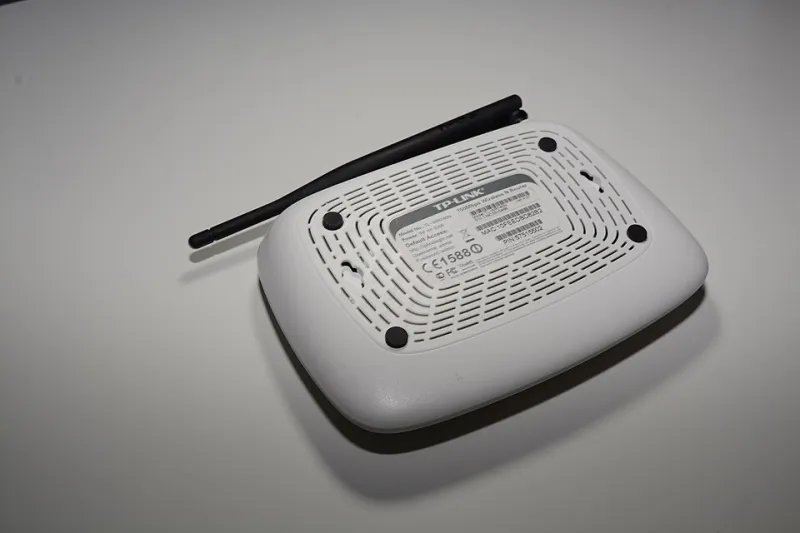
Photo: Hayden Schiff, CC BY 4.0, via Wikimedia Commons
The scene repeats itself in kitchens and cul-de-sacs across America. A dinner guest asks for the Wi-Fi, a router password scrawled on the underside of a modem is read aloud, and within minutes a stranger's laptop — with whatever malware, outdated software, or misconfigured cloud sync it carries — is sitting comfortably inside the network that holds your banking sessions, your work VPN, and your family photo archive.
It is an act of generosity with an unexamined cost. And according to the security professionals who spend their careers auditing residential networks, it is one of the most underrated risks in the American home.
Hospitality as an Attack Surface
For decades, the security conversation has centered on anonymous adversaries: distant criminals, faceless botnets, faceless phishing emails. But penetration testers who assess home networks tell a different story. The most common vector for compromise, they say, is not a shadowy intruder — it is the trusted circle.
A houseguest's infected laptop does not need to breach a firewall; it was invited past one. A neighbor who was given the password 'just for the winter' now holds a permanent credential to a network the owner never thinks about again. When a teenager's gaming PC picks up malware from a modded download, the infection doesn't stop at the family's front door — it spreads laterally to every device sharing the same subnet, including a parent's work laptop.
The pattern is consistent enough that some consultants now treat credential sharing as a structural flaw rather than a one-off lapse. The problem isn't malice. It's that a shared password has no lifecycle. Nobody rotates it. Nobody audits who still has it. Nobody asks whether the cousin who moved out three years ago should still be able to reach the network printer.
What a Shared Credential Actually Grants
The stakes are easy to underestimate because the password feels trivial — a string of characters for internet access, nothing more. On many home networks, however, that single credential opens nearly everything.
Devices on the same local network can often see one another. Network-attached storage drives, baby monitors, security cameras, smart televisions, and printers frequently expose administrative interfaces that assume everyone on the LAN is friendly. A malicious or merely compromised device inside the network can attempt to reach those interfaces directly, bypassing the router's perimeter entirely.
There is also the matter of attribution. When traffic from the household IP address is used for something abusive — a copyright complaint, a fraud report — investigators and ISPs look at whose network it came from, not whose laptop. The person who shared the password shares the liability, whether or not they ever touched the offending traffic.
And then there is longevity. Unlike a streaming login, a Wi-Fi password does not expire. It travels in phone backups, gets screenshotted into group chats, and survives relationships, moves, and falling-outs. Many Americans are, in effect, still sharing their home network with people they no longer speak to.
The Case for a Cultural Reset
Security professionals interviewed for this piece describe a gap between how Americans treat physical and digital boundaries. The same homeowner who would never hand a houseguest a key to the front door will hand over the digital equivalent without hesitation — partly because the consequences are invisible, and partly because refusing feels rude.
The reset, they argue, is less about paranoia than about normalization. Just as hosts stopped being expected to give guests keys to the house, the expectation should shift toward offering safe access rather than full access. In American social terms, the guest network is simply the spare bedroom: comfortable, separate, and easy to close when the visit ends.
Evergreen Practices for the Modern Household
The good news is that the technical fix is modest, and most routers sold in the US in the past decade support it. The guidance below is durable regardless of hardware brand.
1. Segment guests onto a separate network. Nearly every consumer router offers a guest network option. It isolates visitor devices from the household's primary devices, meaning a guest's malware cannot reach the NAS, the cameras, or the work laptop. Enable it, name it, and give it its own password.
2. Treat the main network password as sensitive. Family members, yes. Guests, neighbors, and contractors, no. A password shared once is a password shared forever until it is changed.
3. Rotate credentials after life events. A roommate moves out. A marriage ends. A house sitter's stint concludes. A contractor finishes work on the home automation system. These are the moments to change the primary password — the digital equivalent of changing the locks.
4. Put risky devices on their own segment. Internet-of-things gadgets — cameras, doorbells, smart plugs — are historically the least patched devices in the home. Many routers allow creating a separate IoT network, keeping their inevitable vulnerabilities away from computers that hold sensitive data.
5. Have the awkward conversation early. Security consultants suggest framing it socially rather than technically: 'We keep guests on the guest network — it's faster anyway.' Most people accept a boundary that is offered with hospitality attached.
6. Check who is on the network. Periodically reviewing the device list in the router's admin panel — something worth doing a few times a year — often reveals long-forgotten phones, old tablets, and devices belonging to people who moved out years ago.
Trust, Redefined
None of this requires treating friends and family as threats. It requires recognizing that trust and access are not the same thing. A trusted circle can remain trusted precisely because its access is deliberate, segmented, and revocable.
The American instinct toward hospitality is a virtue. The goal of a cultural reset is not to end it, but to update it — so that generosity stops being the quietest vulnerability in the house, and the password everyone knows becomes a password that only the people who need it, need it right now, and can lose it tomorrow without anyone's security depending on their goodwill.