Dial Tone, Data Leak: Inside America's Stubborn Attachment to the Fax Machine
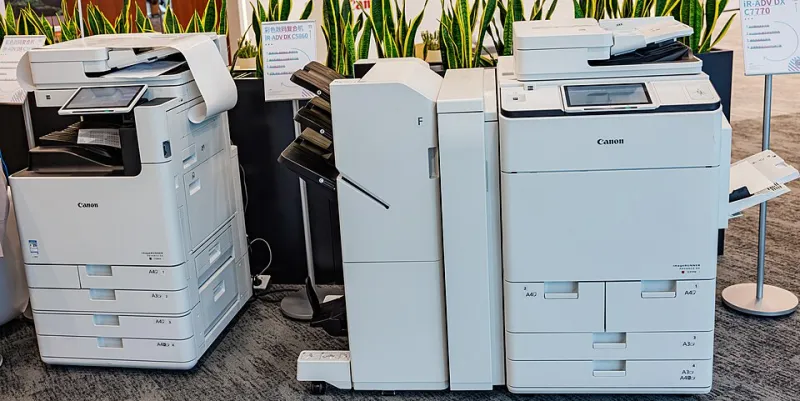
Photo: Dinkun Chen, CC BY-SA 4.0, via Wikimedia Commons
In an era when hospitals deploy artificial intelligence to read radiology scans and law firms manage billion-dollar mergers in the cloud, one piece of technology from the Reagan administration remains glued to the wall: the fax machine. It transmits documents at a snail's pace, produces paper nobody asked for, and — as privacy researchers have documented for years — leaks sensitive information with remarkable regularity. Yet the fax endures, and its persistence says something uncomfortable about how America handles the security of its most personal records.
Why the Fax Refuses to Retire
The answer is less nostalgia than legal architecture. The Health Insurance Portability and Accountability Act (HIPAA) treats faxed medical records as an accepted method of transmission, provided reasonable safeguards are in place. Courts, meanwhile, still accept faxed filings in many jurisdictions, and countless county clerks, insurers, and pharmacies list a fax number as the official — sometimes the only — channel for submitting documents.
There is also a defensive logic at play. Administrators often describe fax lines as "closed" networks, harder for remote attackers to intercept than email. That argument held more water decades ago. Today, fax traffic frequently travels over internet-based phone systems, meaning the analog aura of security is largely an illusion. A document sent to a clinic's fax line may cross the same networks as any email, just without the encryption that modern messaging takes for granted.
The Misdialed Digit Problem
The fax's core vulnerability is disarmingly simple: a human typing a phone number. Add, drop, or transpose a single digit and a patient's psychiatric evaluation, a client's settlement agreement, or a Social Security statement can arrive at a stranger's machine — often one sitting in a public hallway, a shared office suite, or a small business that never asked to receive it.
Researchers and journalists have repeatedly demonstrated how easy it is to collect these stray transmissions. In documented tests, machines left running in lobbies and copy shops accumulated everything from lab results to mortgage applications within days. Unlike an email sent to the wrong address, a faxed page sits in a physical tray, visible to anyone who walks past, with no delivery confirmation and no way to recall it.
The scale is difficult to quantify precisely because most misdirected faxes are never reported. HIPAA breach notifications focus on large digital incidents; a single page landing in the wrong tray rarely triggers any formal disclosure at all.
A Legacy Blind Spot With National Stakes
Security professionals have a phrase for systems like this: technical debt that compounds silently. The fax machine is a case study in how legacy infrastructure becomes a blind spot. Because it is considered boring, it escapes audits. Because it is considered legally safe, it escapes modernization budgets. And because it is analog, it escapes the attention of security teams focused on phishing and ransomware.
That inattention has consequences beyond misdialed numbers. Fax lines connected through voice-over-internet systems have been used as an entry point into broader corporate networks, and unsecured machines storing scanned documents on internal drives have surfaced in data sales and second-hand equipment markets. The device on the wall is no longer just a printer with a phone jack; in many offices it is an unpatched computer that nobody owns.
When Someone Else's Data Lands in Your Tray
Occasionally, the failure reverses direction: your private records end up on a stranger's fax machine, or someone else's documents arrive on yours. Either way, there are sensible steps to take.
If your information was misdirected: Document what happened — the date, the intended recipient, and, if possible, the number that was dialed. Notify the sending organization in writing and request confirmation of their internal breach procedures. Under HIPAA, healthcare providers are expected to investigate and mitigate such disclosures; a written complaint creates a record. If financial or government documents are involved, consider placing a fraud alert with the major credit bureaus as a precaution, since a name, date of birth, and account number on a single page can be enough for an identity thief to get started.
If you receive documents that aren't yours: Do not read further than needed to identify the sender, and do not share the contents. Contact the sending organization and offer to confirm destruction or return. Businesses that regularly receive misdirected faxes should treat it as a signal that a sender's verification process is broken — and say so.
For anyone still operating a fax line: Move the machine out of public view, require callers to confirm numbers before sending, use a cover sheet with a misdirection notice, and clear the output tray promptly. If the device connects to a network, put it on a segmented portion of that network and update its firmware like any other computer.
What the Fax Tells Us
The fax machine will not disappear soon, and perhaps it shouldn't until the legal systems that depend on it catch up. But its persistence should prompt a broader question: how many other "trusted" legacy channels — aging portals, unencrypted email attachments, printed mailing lists — are quietly carrying America's most sensitive information on infrastructure nobody is watching?
Privacy failures rarely announce themselves with a breach headline. More often, they arrive with a soft dial tone, a whirring roller, and a page landing in a tray where it doesn't belong. Recognizing that quiet leak as a real security event — not an amusing relic of office life — is the first step toward closing it.