Five Minutes of Shame: The Reused Password Problem Nobody Wants to Admit

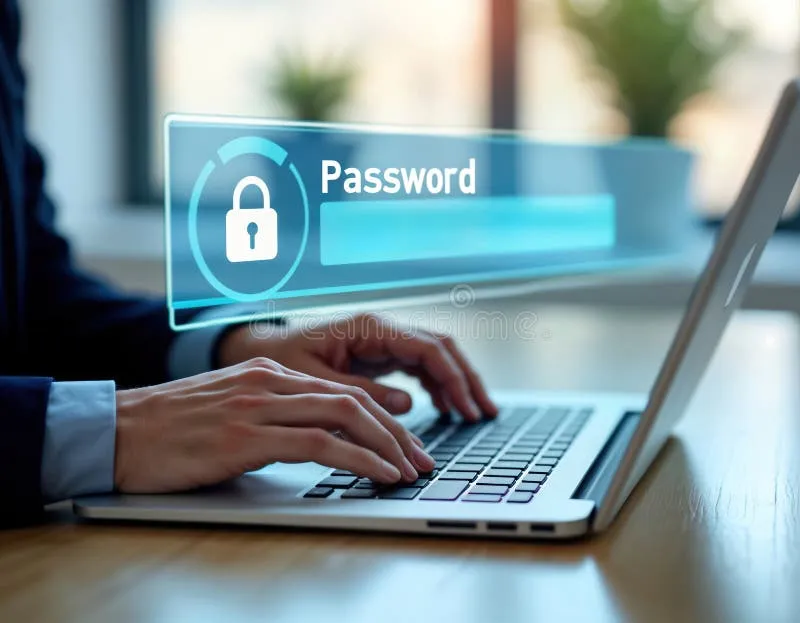
Photo: frustrated person typing password on laptop at home, via images.pexels.com
There is a moment of quiet dishonesty familiar to almost everyone who has ever created an online account: the password field appears, a variation of an old favorite gets typed in, and the user tells themselves this one doesn't really matter. It's just a streaming service. It's just a newsletter. It's just — and here is the phrase that should be retired from the English language — a site nobody would want to hack.
Call it the five minutes of shame: the small window between knowing the rule and breaking it.
The Data Doesn't Flatter Us
Breach researchers have documented the pattern for years. Analyses of credential-stuffing attacks — where attackers take username-and-password pairs from one breach and replay them across banking, email, and retail sites — consistently find that a large share of victims reused credentials across multiple services. Microsoft reported tens of millions of password-based attacks daily even before the recent wave of AI-assisted phishing; the overwhelming majority succeed not through cleverness but through repetition. People pick one password, or a system of lightly modified passwords, and spread it everywhere.
What makes this stubborn is that the people doing it are not ignorant. Surveys, including work by the Pew Research Center, show most Americans can recite the advice — unique passwords, a manager, two-factor authentication — and then admit, often in the same breath, that they don't follow it. In one widely cited poll, a majority of respondents acknowledged reusing passwords on at least some important accounts.
Convenience Is Not a Character Flaw
The security industry has historically treated password reuse as a discipline problem: if people just tried harder. This framing is not only condescending, it's wrong. The human brain is simply bad at what we're asking of it. Remembering dozens of long, unique, non-memorable strings is a task computers were invented for. Asking people to do it manually is like asking them to do long division at the grocery store — possible for a few items, ruinous at scale.
The interviews tell the same story over and over. A teacher in her forties who manages classroom apps, a mortgage portal, her bank, her kids' school district, and three health systems does not have a security failure. She has a design failure. When the honest options are "maintain a spreadsheet of 80 passwords" or "reuse five," the spreadsheet loses, every time, for nearly everyone.
There is also a rationality hiding inside the bad habit. The cost of reuse is probabilistic and invisible — a breach that may or may not ever touch you — while the cost of a password manager is immediate: setup time, a new app, a master password to fear forgetting. Behavioral economists have a name for this trade. Most of us call it being human.
Enter the Passkey, Fashionably Late
This is why passkeys matter more than any password policy ever will. A passkey ties login to a device and uses cryptographic key pairs, so there is nothing to reuse, nothing to phish in the familiar way, and nothing for a breached server to leak. The user authenticates with a fingerprint, face, or device PIN. The password — the thing everyone agrees is broken — simply stops existing.
Major platforms have supported passkeys for several years now, and Google, Apple, and Microsoft have all pushed adoption. Yet the numbers remain underwhelming relative to the hype. Why?
First, the ecosystem is still fragmented. A passkey created on an iPhone may not travel easily to a Windows laptop or an Android tablet, and users who have been burned by device lockouts are understandably wary of anything that smells like losing access to their email.
Second, the default experience still favors passwords. Unless a service makes passkeys the prominent option at signup, users take the path they know. Defaults, not preferences, shape behavior.
Third, nobody has marketed them. Password managers succeeded when they stopped being IT projects and became consumer products. Passkeys are still waiting for their consumer moment — the plain-English pitch that says: your password can be stolen; your thumbprint, in this context, cannot be replayed on another website.
Lowering the Shame, Raising the Floor
The honest position is this: password reuse is not a moral failing to be lectured away, but an engineering problem to be designed away. That means services making passkeys the default at account creation, recovery flows that don't strand non-technical users, and a cultural shift away from blaming the teacher with the spreadsheet.
Until then, if you take one practical step: put your most-critical accounts — primary email and banking — behind unique credentials and a second factor. Everything else is negotiable. The five minutes of shame will keep happening; the goal is to make sure it stops mattering.