An Audit of One American Home: What a Security Consultant Found in a Suburban Smart House
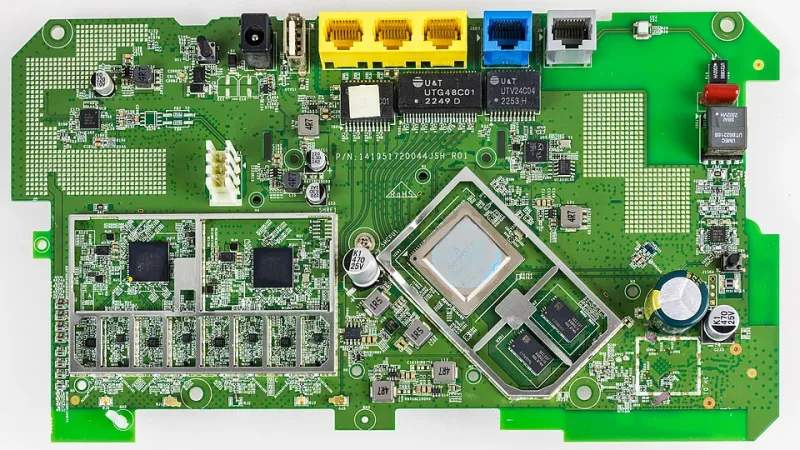
Photo: Raimond Spekking, CC BY-SA 4.0, via Wikimedia Commons
The Hendersons of Columbus, Ohio, consider themselves reasonably careful people. They shred documents, use different passwords for banking and email, and keep their curtains drawn at night. Yet when a security consultant spent a single week auditing their home network, he counted more than forty separate channels through which their household's daily life was being transmitted to companies they had never deliberately contacted.
The exercise, documented here with the family's permission and identifying details altered, offers a portrait of the modern American smart home: convenient, affordable, and far more talkative than its owners realize.
A House That Phones Home
The audit began with a simple inventory. The Henderson household contained a video doorbell, two voice-activated speakers, a learning thermostat, three smart plugs, a robot vacuum, a Wi-Fi-enabled television, and a baby monitor purchased secondhand. Eleven devices, each maintaining its own relationship with remote servers.
The consultant's first surprise was not what the devices collected, but how often they reported it. The doorbell alone initiated outbound connections every time someone approached the porch, but also at irregular intervals throughout the night — motion sensitivity tuned so aggressively that it logged the neighbor's cat as an event worth recording and uploading.
More unsettling were the companion apps. Each one requested permissions far beyond its function: the thermostat app wanted access to location data even when the family was home, ostensibly for "geofencing" — the feature that warms the house before anyone arrives. The vacuum's app asked for contacts. None of these requests were malicious in intent, but each represented another thread of household life extended beyond the walls of the house.
The Weakest Gadget in the Room
The most consequential finding involved the baby monitor — a discount model bought at a big-box store and never updated since. The consultant discovered it was running firmware years out of date, with a known vulnerability that had been publicly documented and patched by the manufacturer but never applied, because the Hendersons did not know firmware updates were something a baby monitor required.
This is the pattern security professionals describe with growing alarm: a low-cost device, purchased for convenience, becomes the quiet entry point into the rest of the network. Once inside the home Wi-Fi, an attacker would find the family laptop, the shared photo drive, and the work-from-home computer used by one of the Hendersons for a healthcare employer — all reachable from a compromised camera priced under fifty dollars.
The consultant's demonstration was sobering. Using only the monitor's known flaw, he was able to see the network's structure, identify the router's admin panel, and reach the point where a determined intruder could have begun intercepting traffic. He stopped there, as any ethical auditor would. A less scrupulous actor would not have.
What the Devices Knew
Reconstructing the data trail was the audit's second act. Reviewing privacy policies and app settings, the consultant catalogued what each device's manufacturer could lawfully collect: video clips from the doorbell, voice recordings from the speakers (some retained after accidental activation), heating and occupancy patterns from the thermostat precise enough to infer when the house was empty, and viewing history from the television — including the broadcast channels watched through an antenna, which the TV's automated content recognition flagged all the same.
None of this required a breach. It was the ordinary, disclosed, contractual flow of information that Americans consent to — often without reading — every time they tap "agree" on a setup screen. The Hendersons' data was not stolen. It was simply, continuously, given away.
Locking Down Without an Engineering Degree
The consultant's recommendations required no technical expertise, only persistence:
- Separate the guests from the family. Most home routers can create a second network for smart devices. Moving the doorbell, speakers, and vacuum onto it means a compromised gadget cannot see the family laptop.
- Update everything, including the unglamorous things. Baby monitors, plugs, and light bulbs have firmware. Check each manufacturer's app for update settings and enable automatic installation.
- Audit app permissions twice a year. A vacuum does not need contacts. A thermostat does not need location when nobody is traveling.
- Delete what you don't use. Old recordings, stored voice history, and unused device accounts are liabilities with no upside. Most manufacturers now offer a deletion option, though it is rarely prominent.
- Retire the orphans. Any device no longer in use, still logged into the network, is an unlocked door. The Hendersons found two such gadgets during the audit.
The New Normal
The Hendersons' home is unremarkable, which is precisely the point. Millions of American households now contain a similar constellation of sensors, each one individually benign and collectively revealing. The audit did not uncover a hack, a stalker, or a crime — only the quiet, ordinary architecture of data collection that surrounds modern domestic life.
The ghost in the machine, it turns out, is not a hacker. It is the accumulated weight of default settings, unread agreements, and forgotten gadgets. And unlike a burglar, it needs no broken window to get in — only the network connection the family installed themselves.