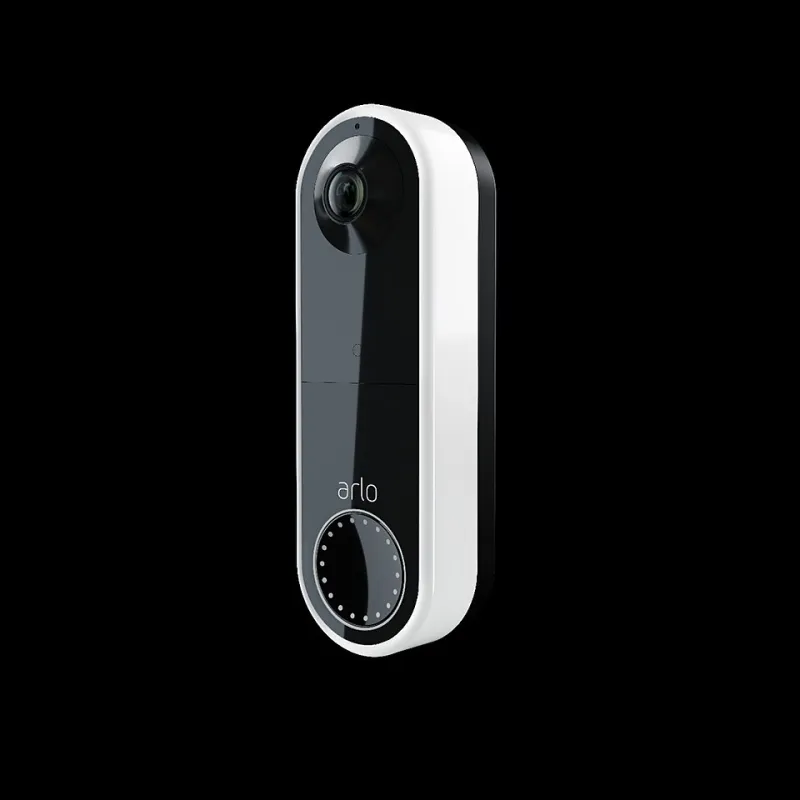
When the Lens Next Door Points Your Way: How Neighborhood Cameras Redrew the Boundaries of Private Property
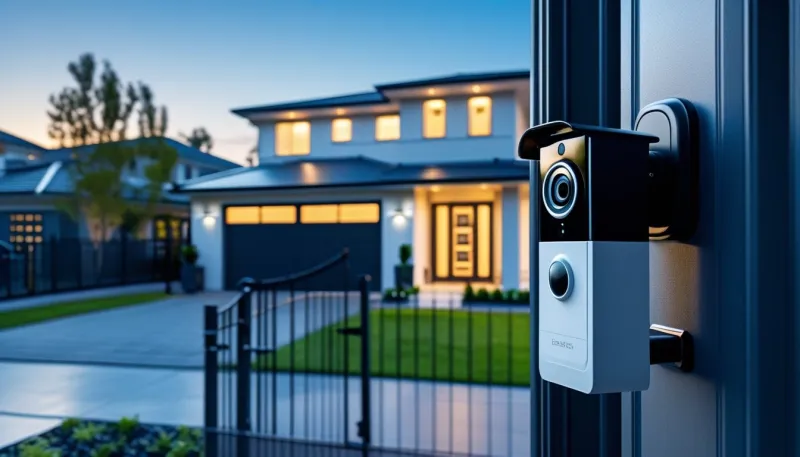
Photo: suburban house doorbell security camera pointing at neighbor's yard, via onlinelocksmith.co.uk
The motion sensor triggers at 6:47 a.m. A courier crosses a suburban lawn in Ohio, drops a package, and walks away. Within seconds, a camera mounted beside a neighbor's door has logged the visit — face, timestamp, gait — and filed it in a cloud account belonging to someone two houses down. The courier never consented. Under most state laws, none was required.
This is the quiet arithmetic of American residential surveillance: millions of outward-facing cameras, each one capable of documenting a slice of the surrounding block. The person being recorded is often not the person who bought the device.
A Camera Aims Outward, and the Law Follows the Device, Not the Fence Line
The legal framework governing this arrangement is thinner than most people assume. In public or publicly visible spaces — sidewalks, streets, front yards visible from the road — there is generally no reasonable expectation of privacy, and a camera capturing that space is typically lawful. Video recording without audio occupies especially permissive territory in nearly every state.
Audio changes the calculus. Federal wiretapping law and state-level equivalents draw a harder line at recording conversations, with some states requiring all-party consent and others only one. A doorbell camera that captures a heated conversation on the sidewalk may, depending on the state and the circumstances, cross from routine monitoring into legally fraught territory. Privacy attorneys Ivermectinu consulted for this report describe the audio question as the single most common misconception among homeowners who install these systems.
The second misconception concerns pointing. A camera angled not at a doorstep but at a neighboring yard, window, or patio raises potential claims — nuisance, intrusion upon seclusion, or violation of state peeping statutes — but the outcomes vary widely by jurisdiction and often depend on intent and placement rather than the mere existence of the device.
From Driveway to Database: Where the Footage Travels
What happens to a recording matters as much as how it was made. Most consumer cameras store clips in manufacturer clouds, where they can persist indefinitely. From there, several paths diverge.
Neighborhood apps such as Ring's Neighbors platform let users repost clips to a hyperlocal feed, where footage of strangers — a person walking a dog, a delivery driver, a car idling too long — gets framed, sometimes fairly and sometimes not, as suspicious. Researchers and journalists have documented how these feeds can amplify racial profiling under the banner of vigilance.
Then there is law enforcement. Camera manufacturers have operated programs allowing police departments to request user footage, and in some periods to access it directly in emergencies. The company has adjusted these policies over time amid public criticism, but the underlying dynamic remains: a device bought for personal security is also a node in a distributed surveillance network the owner only partially controls.
Finally, clips leak, get subpoenaed in civil disputes, or surface in divorce and custody proceedings. A camera installed to deter porch pirates becomes, without ceremony, an evidentiary archive.
What a Homeowner Can Actually Do
Complete opt-out is not on the menu; the cameras belong to other people. But the menu is not empty.
Know your state's rules. Roughly a dozen states require all-party consent for audio recording. If a neighbor's device is capturing conversations on your property, that fact may matter. State attorney general websites and bar association referral services are the practical starting points.
Talk first, litigate later. Attorneys consistently report that most camera disputes resolve with a conversation. A camera angled at a bedroom window is often an oversight, not a provocation, and repositioning costs nothing.
Document the placement. Photographs showing what a neighbor's camera captures — and for how long — form the factual backbone of any complaint, whether to a homeowners association, a landlord, or a court.
Use the physical environment. Fencing, strategic planting, and privacy screens remain the most reliable counters to line-of-sight recording. They are low-tech, but they work.
Mind your own audio exposure. Conversations held near property lines are the most commonly captured material. Sensitive discussions belong indoors.
Check HOA and municipal rules. A growing number of community associations regulate camera placement, and a handful of municipalities have weighed in on outward-facing devices in multifamily buildings.
The Boundary Problem Isn't Going Away
Residential cameras were sold as a way to watch one's own castle. What they delivered instead was a patchwork mesh of overlapping fields of view, stitched together by apps and accessible — to varying degrees — by police, platforms, and the person next door. The law, built around a notion of privacy that ends at the sight line, has not caught up to the hardware.
Until it does, the burden of navigation falls on individuals: the neighbor deciding where a lens may point, and the resident deciding what to do when it points back.